
Three-Star Ping-Pong Balls: Quality Grade vs ITTF Approval
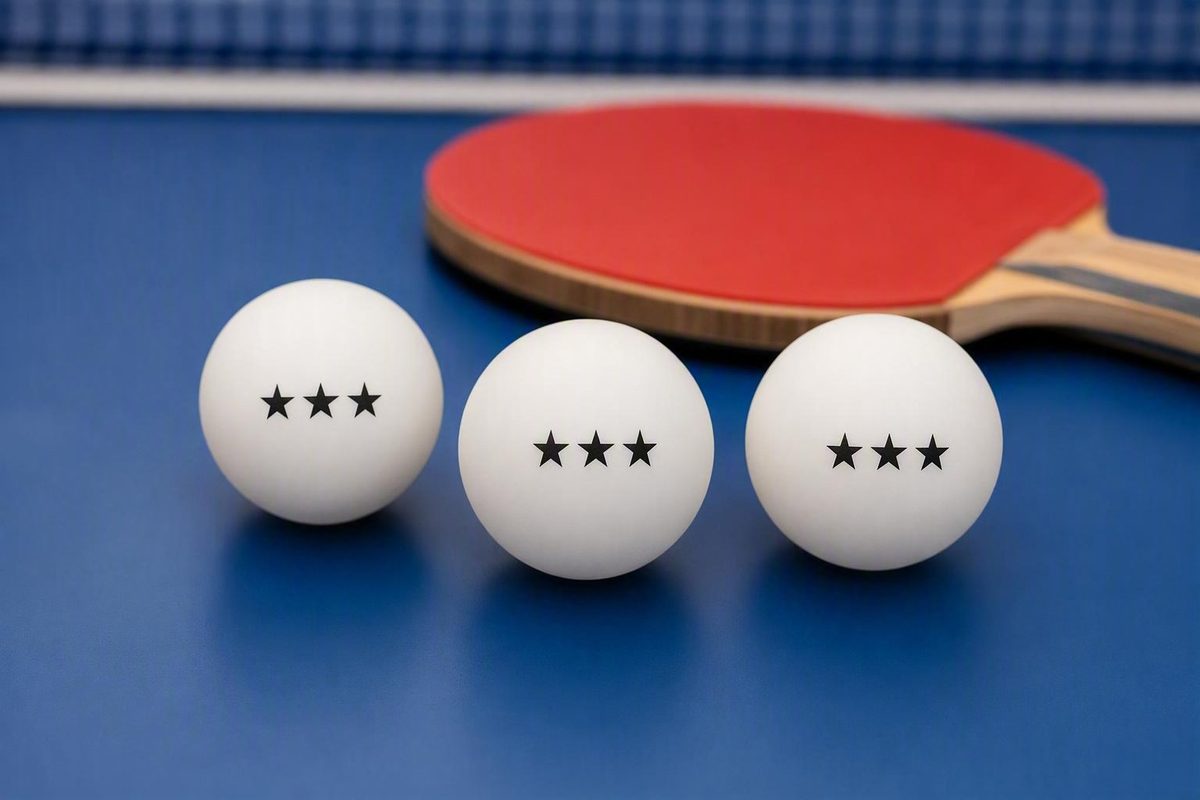
Three stars usually mark a brand’s premium ball, but stars alone do not prove tournament approval. Learn what to check before buying match balls.
A three-star ping-pong ball is normally a manufacturer’s highest quality grade, intended for match play rather than casual hitting or high-volume drills. But the stars are not, by themselves, proof that a ball is legal for a particular sanctioned tournament.
For competition, the more useful checks are the exact model, its ITTF approval status and the ball named by the event organizer.
Three stars, ITTF approval and 40+ are different markings
| Marking | What it tells you |
|---|---|
| ★★★ / 3-star | The maker positions the ball as a premium or competition grade. |
| ITTF / ITTF Approved | That specific ball brand or model has gone through the federation’s approval process. Check it against the ITTF equipment list. |
| 40+ | The ball is non-celluloid; it does not mean a diameter of 40-plus millimetres. |
The distinction matters because the star scale is a grade, not a standalone certificate. The ITTF’s 2014 Technical Leaflet T3 said that if a numbering system was used, no grade higher than three could appear. It separately required an approved ball’s stamp to include an ITTF approval mark, brand, country of production and either “40” or “40+,” depending on material (Technical Leaflet T3). In other words, three stars and ITTF approval are related signals commonly seen on competition balls, but they are not interchangeable.
The ITTF now directs buyers to its searchable list of approved balls. Because approval and availability can change, use that list rather than relying only on a product photograph or marketplace title.
What makes a match ball better?
The practical benefit is consistency. Better-selected balls should vary less in roundness, weight, hardness and rebound, so a player encounters fewer unexpected wobbles or odd bounces. The T3 approval protocol described laboratory measurements for weight, diameter, sphericity, bounce, veer, hardness and colour. Tests were conducted on samples rather than justified by the number of stars printed on the shell (Technical Leaflet T3).
That does not mean every three-star ball from every brand will feel identical. Material, seam construction and manufacturing differences can still produce a different sound, hardness or playing feel. The ITTF itself noted during the plastic-ball transition that reducing variation within and between products remained an area for improvement (ITTF).
Three-star labeling is nevertheless the normal competition tier. For a concrete elite-level example, the ITTF named the Butterfly Three-Star Ball R40+ as the official ball for the World Championships Finals from 2024 through 2026 (ITTF). That example shows what a tournament ball designation looks like; it does not make every three-star product tournament-approved.
Which balls should you buy?
- For an upcoming tournament: Find the event’s exact brand, model and colour, then practise with it. “Three-star” alone is not specific enough.
- For league or club matches: Choose an ITTF-approved three-star 40+ ball unless the league specifies another model.
- For normal practice: A bulk training ball can be economical, but use match balls for serve, receive and match-simulation sessions if the difference affects your timing.
- For casual play: One-star, two-star or ungraded balls may be adequate if cost matters more than uniformity.
A manufacturer’s guide follows the same broad use pattern—one-star for casual play, two-star for learning or practice, and three-star as the premium competition tier—but that is purchasing guidance, not an ITTF rule (JOOLA).
Quick buying check
Before ordering, confirm all four:
- Exact model name, not merely “professional” or “tournament quality.”
- Three-star grade for match use.
- ITTF approval on the current equipment list if your competition requires approved equipment.
- Correct event ball and colour in the tournament information.
Also inspect each ball before play. A visible crack, dent or pronounced wobble makes even a correctly marked three-star ball a poor match ball. The shortest answer is therefore: three stars indicate the premium grade, while current ITTF approval and the tournament’s named model determine whether it is the right competition ball.