
How Big Is a Regulation Table Tennis Ball?
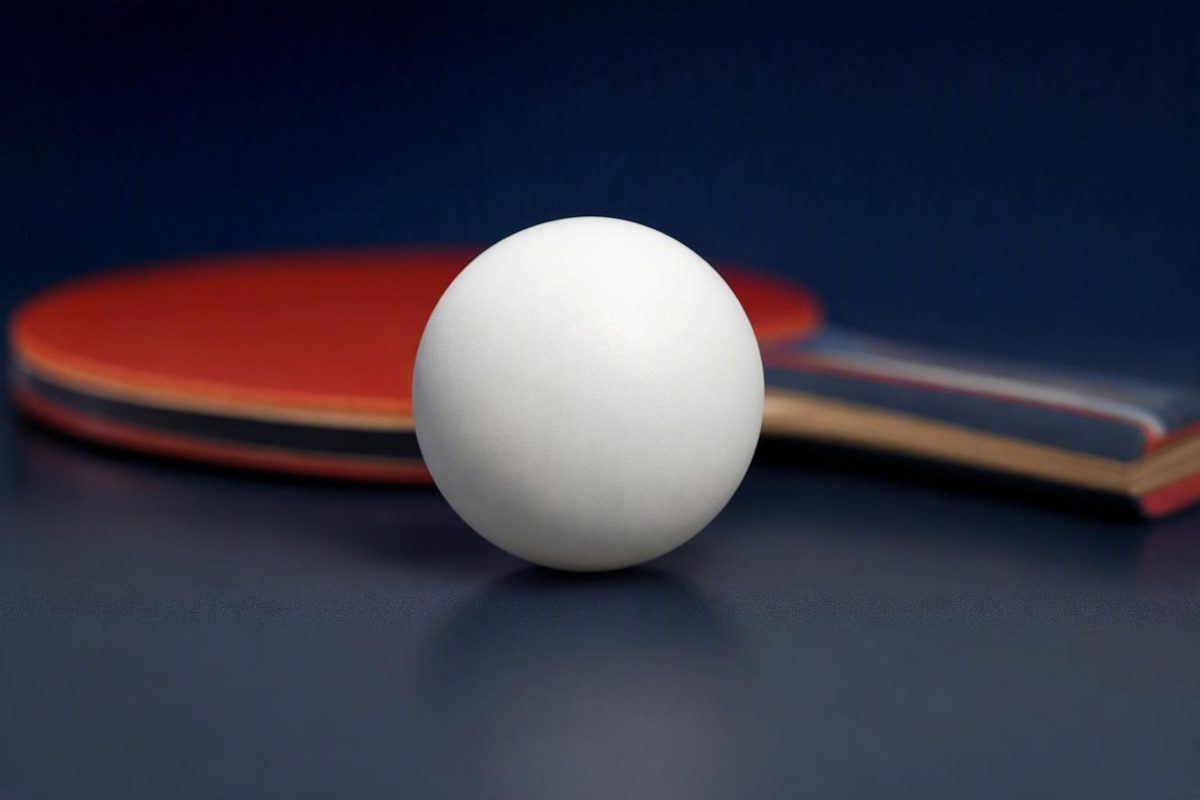
The regulation size is 40 mm—4 cm or about 1.57 inches—with a 2.7 g mass, plus context on 40+ markings and manufacturing variation.
A regulation table tennis ball has a nominal diameter of 40 mm, equal to 4 cm or approximately 1.57 inches, and a reported regulation mass of 2.7 g. A secondary summary of the rules and approval tests distinguishes that nominal specification from the measurements of manufactured balls, which may be slightly above 40.00 mm (40 mm ball rules and testing summary).
The short answer: 40 mm
The regulation diameter of a table tennis ball is 40 mm. Converted into other units, that is 4 cm or approximately 1.57 inches.
| Specification | Value |
|---|---|
| Nominal diameter | 40 mm (4 cm) |
| Inch equivalent | Approximately 1.57 in |
| Calculated circumference | Approximately 125.7 mm (12.57 cm or 4.95 in) |
| Reported regulation mass | 2.7 g |
Circumference is not a separate ball-size rule. It is a calculation based on the diameter of a spherical ball:
π × 40 mm ≈ 125.7 mm
That result converts to approximately 12.57 cm or 4.95 inches. Small differences between published circumference figures can result from rounding π or the converted inch measurement.
The important qualifier is nominal. The rule specification gives the ball’s intended size as 40 mm, but a manufactured ball is not assumed to measure exactly 40.00 mm in every orientation. Competition approval considers physical measurements and roundness as well as the nominal size.
What 40+ means—and why the measurement may exceed 40.00 mm
Modern competition balls commonly carry a 40+ marking and are described as fractionally larger than the earlier “40 mm minus” generation (modern 40+ ball description). The plus sign does not establish one exact diameter such as 40.1 mm or 40.5 mm. It identifies the modern size category rather than replacing the nominal 40 mm specification with a single new measurement.
| Term | What it tells you |
|---|---|
| Nominal rule size | The specified ball diameter is 40 mm |
| 40+ package designation | The ball belongs to the modern category described as slightly larger than older 40 mm balls |
| Approval-test dimensions | Manufactured samples may measure above 40.00 mm within reported test limits |
The secondary rules summary cited above reports that individual balls in an approval sample may have measured diameters from 40.00 mm to 40.55 mm. It also reports that the mean diameter of a 24-ball sample must be between 40.00 mm and 40.40 mm. Because these figures come from a third-party summary rather than current primary governing-body documentation, they should not be treated as an independently verified statement of the latest approval requirements.
According to that summary, diameter is measured with a calibrated device while the ball is rotated about its axes. This method matters because a real manufactured sphere can vary slightly in diameter and roundness. Measurements in multiple orientations reveal the minimum and maximum diameters instead of presuming that the ball is geometrically perfect.
There is therefore no contradiction between calling the regulation ball 40 mm and finding that a physical 40+ ball measures slightly more than 40.00 mm. One figure is the nominal specification; the other is a measured characteristic of a manufactured sample.
From 38 mm to 40 mm to 40+ plastic balls
The development of the modern ball is best understood as three separate stages:
- 38 mm balls: The former standard used a smaller nominal diameter.
- 40 mm balls: The standard diameter increased from 38 mm to 40 mm in 2000, according to a commercial guide summarizing table tennis ball specifications (ball-size history and specifications).
- 40+ plastic balls: A later material transition moved sanctioned competition away from 40 mm celluloid balls and toward the modern plastic generation.
The increase in diameter and the change in material did not occur at the same time. The diameter changed in 2000, while plastic balls were introduced in ITTF-sanctioned events in 2014, as described in a peer-reviewed study of table tennis ball materials and structures.
That study also cites earlier research associating the increase from 38 mm to 40 mm with reductions in ball speed and spin. Those findings should be read narrowly: they do not show that diameter explains every difference players notice between balls.
Material, hardness, roundness, and construction can vary independently of diameter. The cited study, for example, tested selected seamed and seamless models and found differences in hardness and bounce characteristics. Results from those models should not be assumed to describe every table tennis ball available.
In practical terms:
- 38 mm identifies the former, smaller standard.
- 40 mm celluloid identifies the larger nominal size adopted in 2000.
- 40+ plastic identifies the later modern competition generation.
Regulation size, novelty sizes, and competition approval
Not every ball sold for table tennis has the same diameter, and the expected size marking does not by itself establish that a product is approved for sanctioned competition.
| Ball category | Typical size label | How to interpret it | Competition check |
|---|---|---|---|
| Modern competition ball | 40+ | Current regulation-size category | Verify the exact model |
| Training ball | Often 40 or 40+ | Practice ball in the expected size category | Do not assume approval |
| Novelty or specialized ball | 44 mm or 50 mm | Nonstandard oversized ball | Not a regulation competition size |
A specialist retailer catalog lists 44 mm and 50 mm novelty balls alongside standard 40+ competition and training products. Those larger balls may serve specialized or recreational purposes, but they are not the regulation size used for ordinary competition.
Training balls may also carry a 40 or 40+ designation. That tells the buyer about the intended size category, not whether the product satisfies every requirement for sanctioned play.
Star ratings require similar care. They are commercially used quality labels, but a three-star marking alone is not sufficient proof that the exact ball currently has governing-body approval. Diameter, packaging, stars, and an approval logo should not be treated as substitutes for checking the product itself.
For casual play or routine practice, a reputable 40+ training ball will generally meet the need when regulation-style size is the main concern. For sanctioned competition:
- Look for the 40+ designation.
- Expect a nominal 40 mm diameter and a 2.7 g specification.
- Record the complete brand and model name.
- Check that exact model against the governing body’s current approved-ball information.
- Confirm which ball the tournament organizer has selected.
The usable answer is straightforward: choose a nominal 40 mm or 40+ ball for modern table tennis and expect a reported regulation mass of 2.7 g. For competition, verify the exact model rather than relying on size or star markings alone. The 40 mm figure is nominal, so a manufactured 40+ ball need not measure exactly 40.00 mm in every direction.