
Table Tennis Championship History: The Dates That Changed the Record Book
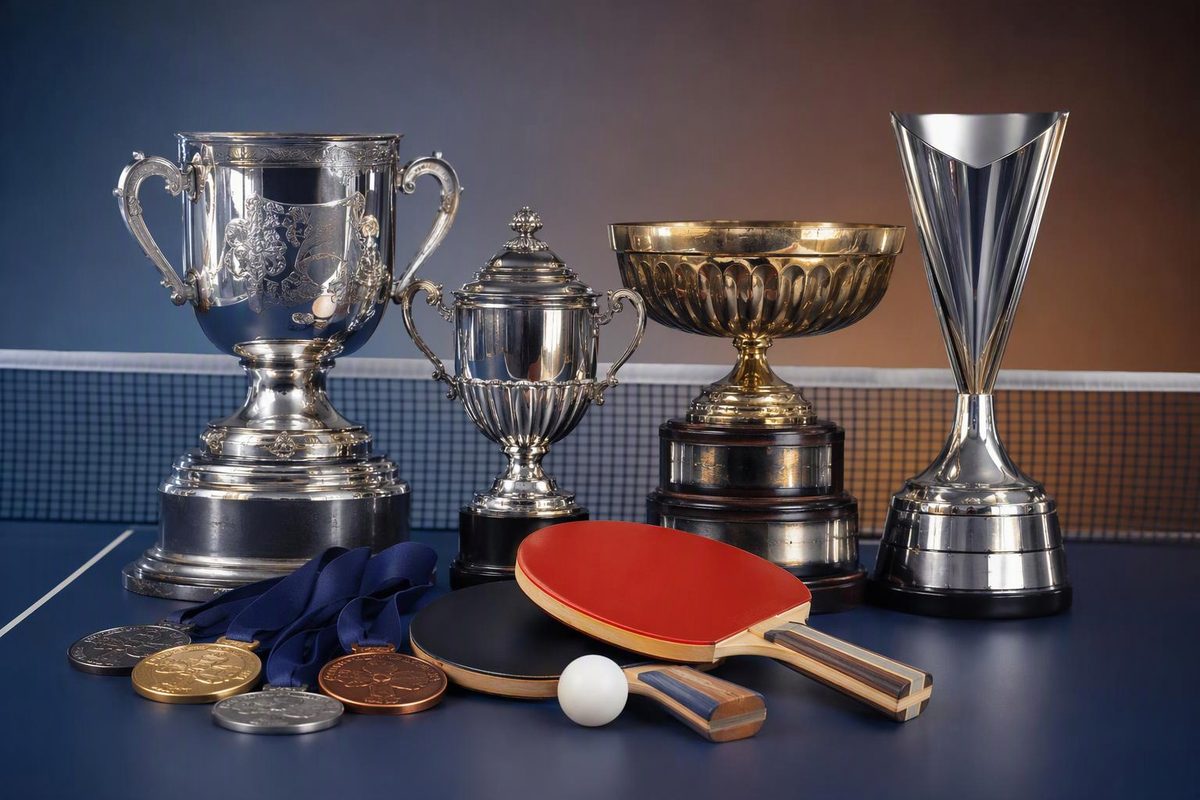
Trace table tennis’s World Championships from London 1926 through European, Japanese and Chinese success—and learn how to compare titles across eras.
The first World Table Tennis Championships took place in London on 6–11 December 1926. Hungary supplied both inaugural singles champions: Roland Jacobi in the men’s event and Maria Mednyanszky in the women’s event.
That is the starting point for World Championships history—not for every major international title. The World Cup and Olympics have separate records. And within the Worlds, a singles championship, a doubles championship and a team championship measure different achievements.
The changes that shaped the championship
The ITTF’s historical timeline records these structural milestones. They matter when comparing careers, because players did not always compete on the same schedule or under the same rules.
| Date | What changed | Why it matters when reading records |
|---|---|---|
| 1926 | The ITTF was established; London hosted the first Worlds, with standardized laws adopted. | This begins the World Championships record. |
| 1939 | Cairo hosted the first Worlds outside Europe. | The championship’s geographic reach expanded before its later Asian successes. |
| 1940–1947 | No Worlds were held during 1940–1946; competition resumed in Paris in 1947. | Wartime gaps removed title opportunities from a generation of players. |
| 1957 | The Worlds changed to a two-year cycle. | Five titles from an earlier, more frequent schedule are not the same opportunity pattern as five biennial titles. |
| 2000–2001 | The ball increased to 40 mm after Sydney 2000; game scoring changed from 21 to 11 points in 2001. | Match scores and playing conditions need era context. |
| 2003–2004 | The regular alternating-year pattern was established: individual events in 2003, teams in 2004. | A five-gold individual edition and a two-gold team edition should not be compared as if both offered seven titles. |
From European success to Japan and China
The early champions
Hungary was central to the first era. Mednyanszky won the first five women’s singles championships: 1926, 1928, 1929, 1930 and 1931, as shown in the women’s singles archive. Victor Barna won five men’s singles titles between 1930 and 1935. His 22 World Championships gold medals are a broader, all-event career total—not 22 singles titles. The ITTF chronology places these Hungarian successes in the European-dominated hard-bat era.
Romania’s Angelica Rozeanu then won six consecutive women’s singles championships from 1950 to 1955. Her run continued into the 1950s transition toward sponge-racket technology described in the same ITTF chronology.
Japan’s breakthrough and China’s first titles
At Bombay in 1952, Japan’s Hiroji Satoh won men’s singles using a racket covered with thick sponge. The ITTF identifies him as the first player to win a world championship with that equipment. Japan’s Tomie Okada-Okawa became the first Asian women’s singles world champion in 1956. These were important markers of the shift toward Asian success and sponge-racket technology. Source: ITTF history.
China’s breakthrough came in 1959, when Rong Guotuan won men’s singles in Dortmund. The official results archive identifies him as China’s first world champion in any sport. China subsequently won its first men’s team title in 1961 and its first women’s team title in 1965, as recorded in the ITTF team champions archive.
Dominance, but not an uninterrupted monopoly
China won all seven gold medals at the 1981 Worlds in Novi Sad. Yet the team record also contains major challenges: Sweden won three consecutive men’s team titles in 1989, 1991 and 1993, then won again in 2000. A unified Korean women’s team won in 1991, and Singapore defeated China for the women’s team title in 2010. Sources: ITTF chronology and team results.
At the 2025 individual Worlds in Doha, Wang Chuqin won his first men’s singles title and Sun Yingsha retained the women’s singles title. Japan’s Shunsuke Togami and Hiroto Shinozuka won men’s doubles—the country’s first title in that event since 1961. That combination illustrates why championship history is best read event by event, rather than reduced to one national dominance narrative. Source: ITTF’s Doha final-day report.
World champion is not the same as world No. 1
The men’s World Cup began in 1980, the women’s World Cup in 1996, and Olympic table tennis debuted in 1988. Those titles should remain distinct from World Championships titles. Sources: ITTF World Cup history and ITTF chronology.
A championship title records who won a particular event. A world ranking aggregates eligible results under a dated rule set. The ITTF regulations updated 27 January 2026 award 2,000 points for a World Championships singles victory, but those points have one-year validity; the historical title remains after its ranking contribution expires. Source: ITTF ranking regulations, sections 1.8 and 3.4.
When comparing players, specify singles titles, all-event golds or all medals, then account for the championship schedule. Use our World Championships medal tables for the historical ledger and world-ranking explainer for the separate calculation behind a player’s position.